
Editorial Policy
Our commitment to precision, transparency, and independent budgeting methodology across all published guides and financial records.
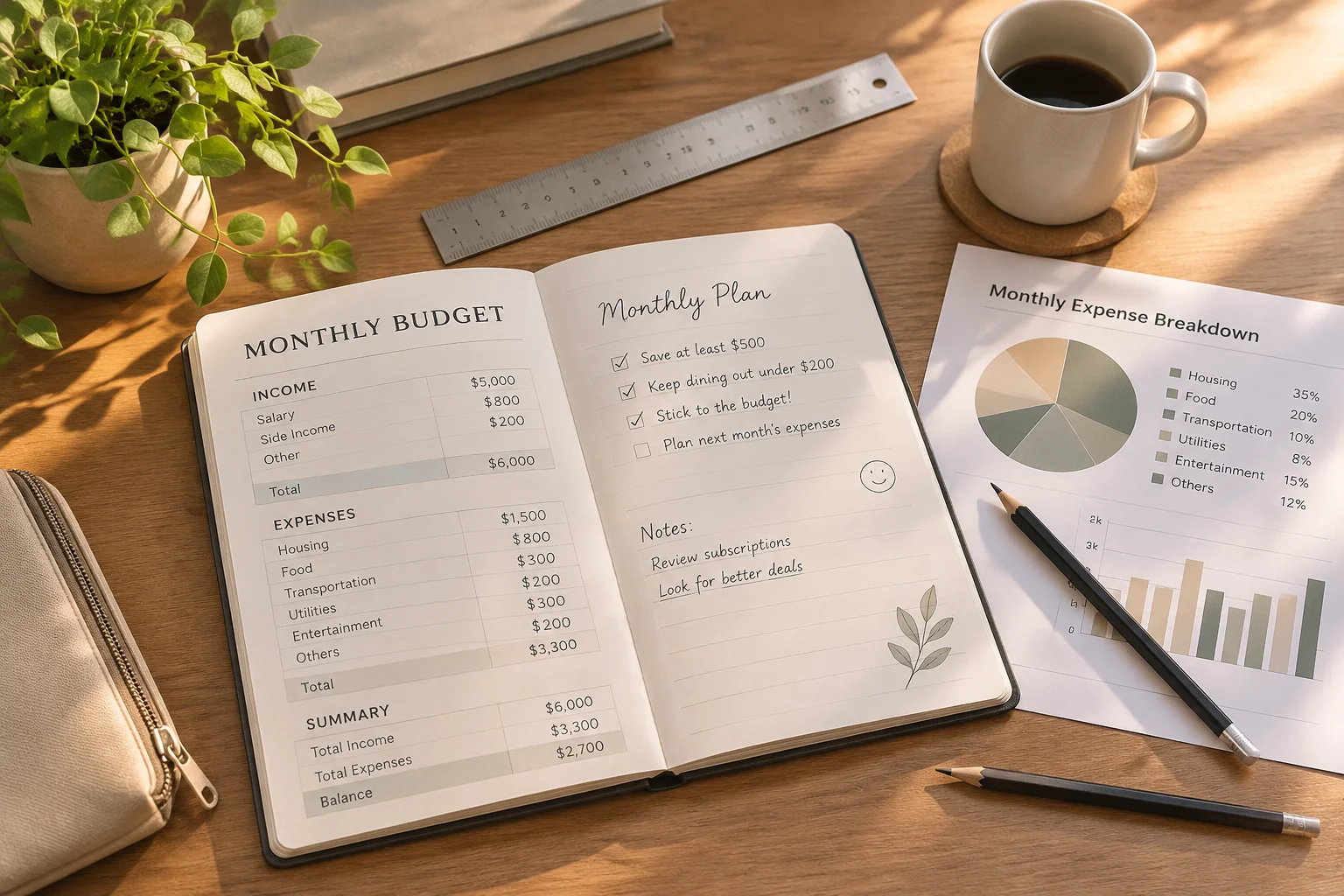
Editorial Principles & Practical Verification
MonthMap Journal is dedicated to clear, actionable, and mathematically verifiable household expense tracking. We believe budgeting strategies must be rooted in real-life tracking routines, practical ledger management, and reliable data.
Our guides avoid speculative theories or ungrounded assertions. Each monthly workbook methodology and expense category framework is tested for arithmetic accuracy, organizational clarity, and usability across desktop software and paper ledgers.
- Empirical Testing: Every budgeting template and expense formula is verified with simulated monthly cycles.
- Mathematical Precision: Ledger balances, category breakdowns, and variance calculations undergo double-entry cross-checks.
- Software Neutrality: Guides detailing tools like Moneydance or custom workbooks emphasize functional setup without vendor bias.
- Continuous Calibration: Monthly record structures are updated annually to match evolving household operational costs.
Three Pillars of Our Publishing Protocol
Explore the editorial safeguards that ensure our spending records and workbook models remain dependable.
Primary Reference Audits
We consult primary sources including official statistical bulletins, utility billing norms, and municipal averages when quoting benchmark expense allocations across regions.
Cross-Tested Templates
Budget worksheets and category schemes are drafted, stress-tested with real receipts, and refined against common spending anomalies before publication in our Monthly Workbook collection.
Dated Context
Every calculation and case study includes clear publication and review timestamps so readers understand the economic context of utility, grocery, and recurring expense baselines.
Formula Verification
Every formula displayed in our guides—from variance calculations to rolling 90-day averages—is validated across LibreOffice Calc, Excel, and standalone spreadsheet engines.
Category Consistency
We maintain a normalized taxonomical standard across our Expense Categories library to prevent overlap between fixed and variable allocations.
Recurring Expense Audits
Sub-ledgers for recurring subscriptions and automated monthly outflows are tested for multi-tier pricing shifts, tax inclusions, and billing cycle cadence as explained in Recurring Expenses.
Editorial Autonomy
Our writers and ledger analysts operate independently. Third-party software companies, template vendors, or application publishers have no say in our guide ratings or structure.
Transparent Affiliations
If a resource or book review ever includes an affiliate link, it is clearly flagged at the outset. No commercial relationship ever alters an editorial audit outcome or expense analysis.
Educational Scope
Our materials are prepared strictly for informational budgeting organization. Please review our Disclaimer for boundaries regarding legal or formal accountancy matters.
Corrections & Errata Handling
Despite our careful verification checks, formulas or figures can occasionally contain typographical or arithmetic errors. When an error is discovered in a published worksheet or journal post:
- Corrections to formulas or data tables are executed within 48 business hours of verification.
- A visible change note is appended at the foot of the affected article summarizing the exact revision.
- Downloadable workbook archives are replaced immediately with corrected revision tags.
Learn more about our team on our About Us page, or review our legal conditions in our Terms of Use.
Found an Error?
Report calculation mismatches or broken worksheet logic directly to our editorial team.
Submit Revision