Baseline Target Alignment
Establish sensible targets for recurring household categories prior to the start of each calendar month.
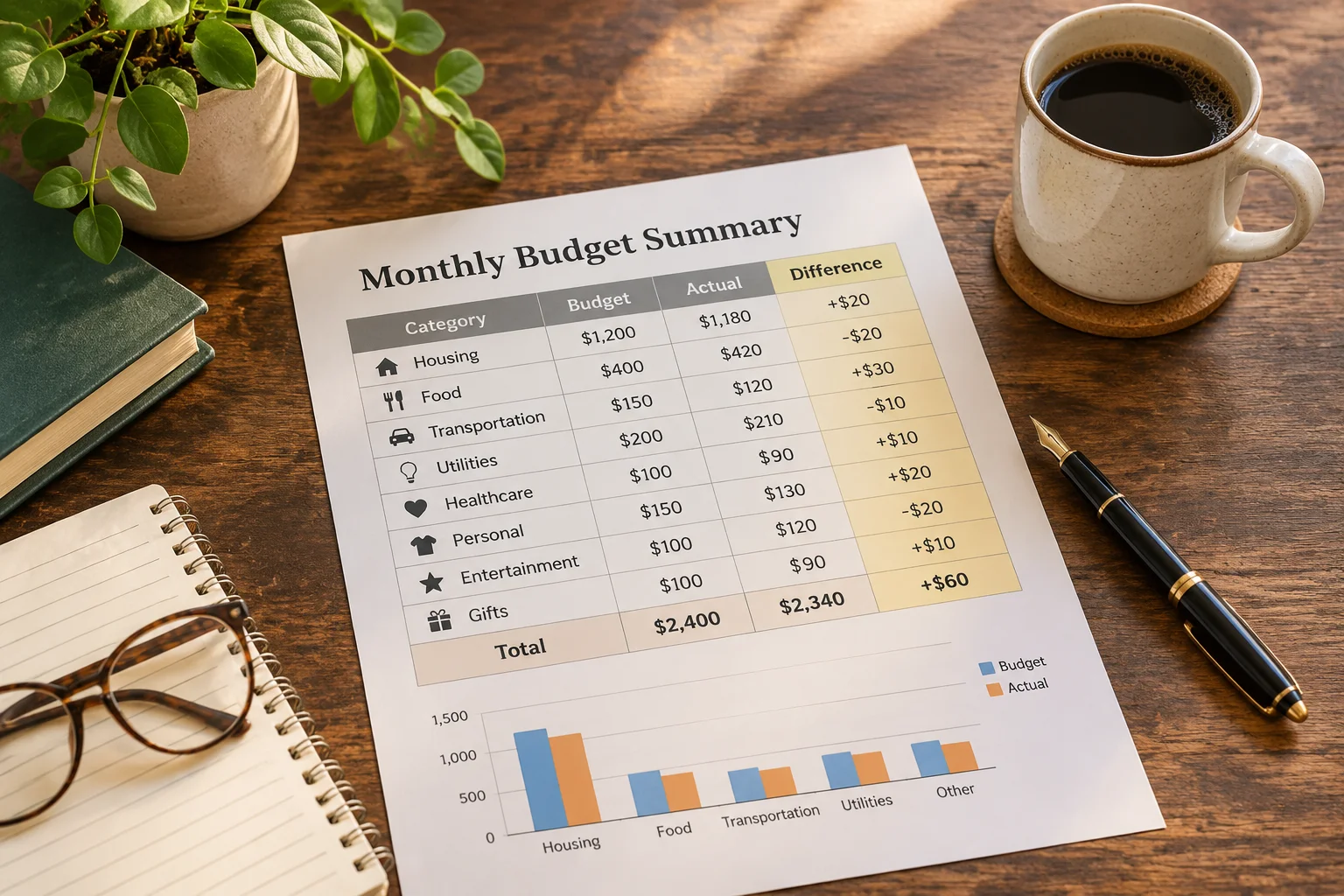
How methodical cross-examination between projected figures and actual ledger records uncovers real spending habits and restores balance.

Aligning estimated line items with documented payments creates a dependable framework for family ledger management.
Establish sensible targets for recurring household categories prior to the start of each calendar month.
Document transaction slips and digital payment notifications promptly to keep logged records current.
Isolate whether spending deviations stem from one-off events, price shifts, or underestimated baselines.
Conduct a swift midpoint audit to reallocate flexible funds across categories before balances deplete.
Differentiate true overspending from billing cycles that straddle adjacent recording periods.
Close the monthly cycle by transferring verified variance insights into next month's planning sheet.
A variance within 5 to 10 percent in variable household accounts represents healthy real-world flexibility rather than planning failure.
Weekly entry checks prevent receipt accumulation and reduce end-of-month reconciliation fatigue to under twenty minutes.
Predetermined monthly contracts rarely vary, allowing reviewers to concentrate scrutiny strictly on variable fluid categories.
Tracking discrepancies across ninety consecutive days reveals structural underestimation patterns that single snapshots obscure.
Comparing planned and recorded expenses stands as the bridge between aspirational intentions and concrete domestic realities. When establishing a monthly ledger plan, families delineate allocations for grocery provisions, utility services, transport maintenance, and incidental leisure. Without methodical contrast against receipts and bank statements, these figures remain abstract projections. Maintaining an active reconciliation journal allows household managers to verify whether daily spending habits mirror established priorities or quietly drift away.
The primary objective of this review is not perfectionism, but transparent observation. Real households encounter unpredictable repair costs, seasonal produce price shifts, and social obligations that challenge static targets. Identifying a modest surplus or deficit in a specific category offers actionable data. By recording transactions systematically, you gain an empirical baseline that informs how future resources should be allocated across both predictable and fluctuating line items.
An effective comparison begins by calculating the variance between your projected sum and the actual settled figure for each ledger item. Positive variances indicate surplus capacity, whereas negative variances indicate overages. Group these findings into distinct causes: was an overage driven by an unforeseen domestic repair, a deliberate conscious decision, or an unrealistically strict baseline? Categorizing variances prevents hasty overcorrections that might strain household comfort in ensuing weeks.
Conclude each review cycle by calibrating subsequent allocations. If three consecutive months demonstrate that culinary supplies require fifteen percent more funding than originally assumed, adjust the starting baseline rather than penalizing personal patience. This pragmatic recalibration transforms personal record-keeping from a restrictive chore into an informative compass for daily tranquility.
Share this comparative guide with family members or colleagues seeking disciplined household bookkeeping routines.
A weekly check-in of ten minutes combined with a comprehensive month-end review produces the best balance of accuracy and manageable effort.
Determine whether the cause was a temporary anomaly or a recurring trend, rebalance surplus funds from flexible lines, and update next month's projection accordingly.
Vendor billing delays, fluctuating municipal sales tax rates, and minor price adjustments naturally produce modest differences without jeopardizing overall household balance.